
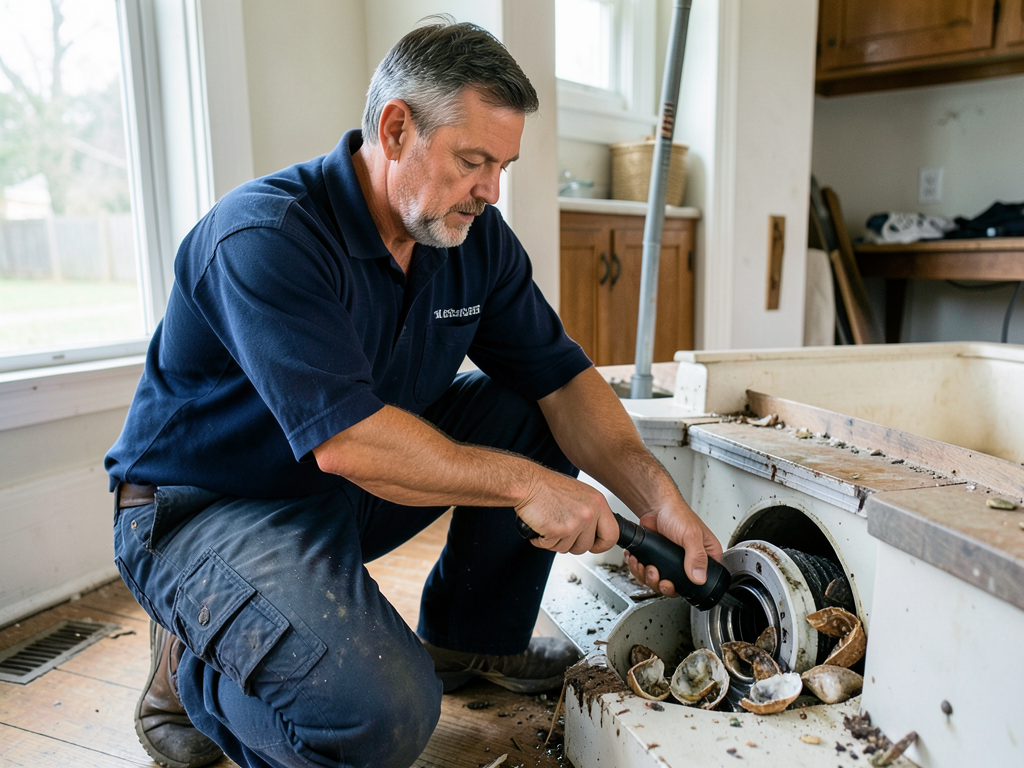
No you cannot put crawfish shells down a New Orleans garbage disposal. This warning comes from local plumbers who see the same damage every crawfish season. Homeowners in Metairie 70001 and the West Bank 70114 call for emergency repairs after Saturday crawfish boils. The damage happens every year and costs hundreds of dollars to fix. Who to Call for a 24 Hour Emergency Plumber in New Orleans.
Crawfish shells contain chitin which grinds into sharp fragments. These fragments act like sandpaper on disposal blades and create concrete-like sediment in your P-trap. The combination leads to motor burnout jammed flywheels and complete system failure. This happens when thousands of pounds of crawfish shells get ground up and flushed down drains across New Orleans. Emergency Drain Cleaning Services for Metairie Homeowners and Businesses.
Why Crawfish Shells Destroy Disposals
Crawfish shells are not like vegetable peels or soft food waste. The shells contain calcium carbonate and chitin which create microscopic shards when ground. These shards are harder than the steel in most disposal blades. As the impeller spins these fragments scrape away the blade edges dulling them within minutes of use.
The grinding process also creates a fine powder that mixes with water and grease from the boil. This mixture settles in the P-trap and horizontal drain pipes. Over time it hardens into a rock-like substance that blocks water flow completely. The sediment buildup is worse in New Orleans homes because our older clay and cast iron pipes have rougher interiors that trap more debris. Fast Tankless Water Heater Installation for New Orleans Residents.
According to the International Plumbing Code Section 701.2 food waste grinders must be designed to handle typical household food waste without causing blockages. Crawfish shells exceed this standard by creating abrasive particles and sediment that standard disposals cannot process safely. International Plumbing Code Section 701.2.
Myths That Cost New Orleans Homeowners Money
Many New Orleans residents believe running cold water will solve the problem. This myth persists because cold water does help flush some debris. However cold water cannot prevent the shell fragments from damaging the impeller or stop the sediment from forming in your pipes. Fast Water Heater Repair and Replacement Services for Metairie Residents.
Another myth claims shells sharpen disposal blades. This is backwards. The hard fragments actually dull and damage the cutting surfaces. A dull impeller requires more power to spin which leads to motor overheating and eventual failure.
Some people think if the disposal sounds like it is working everything is fine. The grinding noise you hear is actually the impeller struggling against shell fragments. The motor may be working harder than normal drawing excess current and generating heat that shortens its lifespan.
What Actually Happens Inside Your Disposal
When crawfish shells enter a disposal the process begins with the shells hitting the shredder ring. The hard fragments bounce around instead of being cut cleanly. This creates a grinding sound that indicates damage is occurring.
The impeller plate then tries to fling the fragments against the grind ring. Since the shells are harder than the metal they create microscopic scratches on the impeller surface. These scratches reduce the efficiency of the grinding process and create more heat.
As the fragments break down further they mix with water and any fats or oils from the boil. This mixture becomes a slurry that flows into the drain. The slurry contains particles too small to see but large enough to settle in pipe elbows and P-traps.
Over the next few hours or days this slurry dries and hardens. The result is a blockage that requires professional drain cleaning to remove. In severe cases the blockage extends into the main sewer line requiring hydro jetting or even pipe replacement.
Proper Disposal Methods for Crawfish Shells
The safest way to dispose of crawfish shells is in the trash. Double-bag the shells in heavy-duty garbage bags to contain the smell. Place the bags in your outdoor trash can with a tight-fitting lid. This prevents odors from attracting animals and keeps your kitchen smelling fresh.
If you want to avoid the smell entirely freeze the shells in sealed plastic bags until your next trash collection day. The cold temperature prevents decomposition and odor development. This method works well for large boils where you generate several pounds of shell waste.
Composting is another option if you have a backyard compost system. Crawfish shells are organic matter that breaks down over time. However the shells take longer to decompose than vegetable matter and the strong seafood odor may attract pests. Only compost if you can maintain proper temperature and moisture levels.
Never dispose of spicy boil water down the drain. The high salt content and spices can damage pipes and create strong odors as they decompose. Pour the boil water into your yard or let it cool and dispose of it with solid waste.
Emergency Steps If You Already Put Shells Down the Drain
If you already put crawfish shells down your disposal act quickly. First turn off the disposal immediately if it is still running. Do not continue to operate it as this will only create more damage and sediment.
Next locate the reset button on the bottom of your disposal unit. This button pops out when the motor overheats or jams. Press it firmly to reset the internal circuit breaker. If the button stays in you may have avoided immediate motor damage.
Try to manually turn the impeller using the hex key that came with your disposal. Insert the key into the center socket on the bottom of the unit and turn it back and forth. This can free minor jams caused by shell fragments.
If the disposal still does not work or makes unusual noises turn off the power at your circuit breaker. Do not put your hand in the disposal. Call a professional plumber who can inspect for damage and clear any blockages.
Time is critical. The longer shell fragments remain in your pipes the more sediment they create. A professional drain cleaning within 24 hours can prevent a complete blockage and save you from emergency service calls during peak boil season.
Signs Your Disposal Has Shell Damage
Listen for changes in your disposal’s sound. A healthy disposal makes a steady grinding noise. If you hear rattling clicking or metal-on-metal sounds shell fragments have damaged the impeller or grind ring.
Watch for slow drainage in your sink. This indicates sediment buildup in the P-trap or drain pipes. The water may drain slowly at first then stop completely as the blockage worsens.
Smell for unusual odors coming from your drain. As shell fragments decompose in your pipes they create a strong seafood smell that worsens over several days. This odor indicates organic matter is trapped in your plumbing.
Feel for vibration or wobbling when the disposal runs. Damaged impellers create uneven spinning that causes the entire unit to vibrate. This vibration can loosen mounting hardware and create leaks under your sink. Fixing Slab Leaks and Foundation Plumbing in Your Garden District Home.
Check your electric bill for unexplained increases. A struggling disposal motor draws more power than normal which shows up as higher electricity usage. This is a sign the motor is working harder than it should due to internal damage.
Preventing Future Disposal Emergencies
Keep a separate container near your sink during crawfish boils. Train everyone to scrape shells directly into this container instead of the sink. This simple habit prevents most disposal emergencies.
Install a sink strainer with fine mesh if you frequently host boils. The strainer catches small shell fragments that might otherwise slip down the drain. Empty the strainer into your trash container regularly during the event.
Consider upgrading to a commercial-grade disposal if you host large boils regularly. These units have heavier impellers and more powerful motors designed to handle tougher waste. However even commercial units cannot safely process crawfish shells.
Schedule professional drain cleaning annually if you use your disposal frequently. A plumber can remove sediment buildup before it creates blockages. This preventative maintenance costs less than emergency service calls.
Learn the location of your main water shutoff valve. In case of a major backup you may need to shut off water quickly to prevent flooding. Most New Orleans homes have the shutoff in the front yard near the water meter.
Why New Orleans Plumbing Faces Unique Challenges
New Orleans sits on alluvial soil that shifts and settles over time. This soil movement stresses underground pipes creating small gaps and cracks where debris collects. When crawfish shell sediment enters these compromised areas blockages form more quickly than in stable soil conditions.
Our high water table means many homes have shallow sewer lines. These lines are more susceptible to root intrusion and ground shifting. The combination of shallow depth and compromised pipes makes them vulnerable to any type of blockage.
Many New Orleans homes still have original clay or cast iron sewer pipes from the 1950s and 1960s. These materials have rough interiors that trap debris more effectively than modern PVC pipes. The age of these pipes also means they have existing cracks and weak joints.
According to the Sewerage and Water Board of New Orleans the city’s combined sewer system handles both wastewater and stormwater. This system is already under stress during heavy rains. Adding food waste blockages creates additional problems that can lead to backups and overflows. Sewerage and Water Board of New Orleans.
The cultural importance of crawfish boils means thousands of pounds of shell waste enter our plumbing system every season. This creates a predictable pattern of disposal failures that plumbers must handle during peak demand periods.
When to Call a Professional Plumber
Call a plumber immediately if your disposal trips the circuit breaker repeatedly. This indicates motor damage that requires professional assessment. Continuing to reset the breaker can create electrical hazards.
Contact a professional if your sink drains slowly but the disposal seems to work normally. This suggests a blockage in the drain line beyond the disposal. The blockage may extend into your main sewer line.
Call for emergency service if water backs up into other drains when you run the disposal. This indicates a main line blockage that affects your entire plumbing system. Raw sewage backup poses serious health risks.
Schedule an inspection if you notice water stains under your sink or on walls near plumbing fixtures. These stains may indicate leaks from damaged disposal mounting hardware or cracked drain pipes.
Professional plumbers have specialized equipment like drain cameras and hydro jetters that can locate and clear blockages without damaging your pipes. They can also assess whether your disposal needs repair or replacement.
Cost Factors for Disposal and Drain Repairs
Simple disposal jams cost less to fix than complete motor failures. A jam may require only clearing the blockage and resetting the unit. Motor replacement or new disposal installation costs significantly more.
Drain cleaning costs vary based on blockage severity and location. A simple P-trap cleaning costs less than clearing a blockage in your main sewer line. Hydro jetting services cost more but provide more thorough cleaning.
Emergency service calls during evenings weekends or holidays cost more than standard service calls. Planning your boils during normal business hours can save money if problems occur.
Replacement parts for older disposals may be harder to find and more expensive. Sometimes replacing an old unit with a new one costs less than repairing it especially if the unit is over ten years old.
Preventative maintenance costs less than emergency repairs. Annual drain cleaning and inspection can identify problems before they become emergencies.
Local Resources for Crawfish Season Preparation
The Jefferson Parish Sanitation Department provides guidelines for large event waste disposal. They recommend double-bagging all food waste and scheduling extra trash pickups for major events.
Local hardware stores stock heavy-duty garbage bags and sink strainers designed for seafood boils. Purchasing these supplies before boil season ensures you have proper disposal equipment when you need it.
Many New Orleans neighborhoods have community composting programs that accept seafood waste. Check with your local community center or environmental group about composting options in your area.
Professional plumbing associations in the New Orleans area offer seasonal maintenance tips and emergency contact information. Following their guidelines can prevent many common disposal problems.
Local crawfish vendors often provide disposal advice and may have partnerships with waste management companies for large events. Ask your vendor about their recommended disposal methods.
Frequently Asked Questions
Can I put any part of the crawfish in the garbage disposal?
No. All parts of the crawfish shell are too hard for standard disposals. Even small fragments can damage the impeller and create sediment that blocks your pipes.
How long does it take for shell sediment to create a blockage?
Shell sediment can begin hardening in pipes within 24-48 hours. The blockage may take several days to become severe enough to notice slow drainage or complete stoppage.
Will a more expensive disposal handle crawfish shells better?
No. Even commercial-grade disposals cannot safely process crawfish shells. The shells create sediment and damage that affects all disposal types equally.
Can I use chemical drain cleaners for shell blockages?
Chemical cleaners are ineffective against shell sediment and can damage your pipes. The sediment is too solid for chemicals to dissolve and the harsh chemicals can corrode older plumbing.
What should I do with the spicy boil water?
Never pour spicy boil water down the drain. The high salt content and spices can damage pipes and create strong odors. Pour it into your yard or dispose of it with solid waste after it cools.
You may also find this helpful. What to Do When Your Dishwasher Starts Backing Up into Your Kitchen Sink.
{
“@context”: “https://schema.org”,
“@type”: “BlogPosting”,
“headline”: “Can You Actually Put Crawfish Shells Down a New Orleans Garbage Disposal?”,
“description”: “New Orleans plumbers warn against putting crawfish shells in garbage disposals. Learn why these shells damage disposals and proper disposal methods for crawfish boils.”,
“wordCount”: 2270,
“datePublished”: “2026-05-12T15:52:00.000Z”,
“dateModified”: “2026-05-12T15:52:00.000Z”,
“inLanguage”: “en-US”,
“mainEntityOfPage”: {
“@type”: “WebPage”,
“@id”: “https://libertyplumbingneworleans.com”
},
“publisher”: {
“@type”: “LocalBusiness”,
“name”: “Liberty Plumbing New Orleans”,
“url”: “https://libertyplumbingneworleans.com”
},
“author”: {
“@type”: “Organization”,
“name”: “Liberty Plumbing New Orleans”,
“url”: “https://libertyplumbingneworleans.com”
},
“image”: {
“@type”: “ImageObject”,
“url”: “https://libertyplumbingneworleans.com/wp-content/uploads/2026/03/can-you-actually-put-crawfish-shells-down-a-new-or-1.png”
}
}
{
“@context”: “https://schema.org”,
“@type”: “Plumber”,
“name”: “Liberty Plumbing New Orleans”,
“url”: “https://libertyplumbingneworleans.com”,
“address”: {
“@type”: “PostalAddress”,
“addressLocality”: “New Orleans”
},
“areaServed”: {
“@type”: “City”,
“name”: “New Orleans”
}
}
{
“@context”: “https://schema.org”,
“@type”: “FAQPage”,
“mainEntity”: [
{
“@type”: “Question”,
“name”: “Can I put any part of the crawfish in the garbage disposal?”,
“acceptedAnswer”: {
“@type”: “Answer”,
“text”: “No. All parts of the crawfish shell are too hard for standard disposals. Even small fragments can damage the impeller and create sediment that blocks your pipes.”
}
},
{
“@type”: “Question”,
“name”: “How long does it take for shell sediment to create a blockage?”,
“acceptedAnswer”: {
“@type”: “Answer”,
“text”: “Shell sediment can begin hardening in pipes within 24-48 hours. The blockage may take several days to become severe enough to notice slow drainage or complete stoppage.”
}
},
{
“@type”: “Question”,
“name”: “Will a more expensive disposal handle crawfish shells better?”,
“acceptedAnswer”: {
“@type”: “Answer”,
“text”: “No. Even commercial-grade disposals cannot safely process crawfish shells. The shells create sediment and damage that affects all disposal types equally.”
}
},
{
“@type”: “Question”,
“name”: “Can I use chemical drain cleaners for shell blockages?”,
“acceptedAnswer”: {
“@type”: “Answer”,
“text”: “Chemical cleaners are ineffective against shell sediment and can damage your pipes. The sediment is too solid for chemicals to dissolve and the harsh chemicals can corrode older plumbing.”
}
},
{
“@type”: “Question”,
“name”: “What should I do with the spicy boil water?”,
“acceptedAnswer”: {
“@type”: “Answer”,
“text”: “Never pour spicy boil water down the drain. The high salt content and spices can damage pipes and create strong odors. Pour it into your yard or dispose of it with solid waste after it cools.”
}
}
]
}
{
“@context”: “https://schema.org”,
“@type”: “BreadcrumbList”,
“itemListElement”: [
{
“@type”: “ListItem”,
“position”: 1,
“name”: “Home”,
“item”: “https://libertyplumbingneworleans.com”
},
{
“@type”: “ListItem”,
“position”: 2,
“name”: “Blog”,
“item”: “https://libertyplumbingneworleans.com/blog”
},
{
“@type”: “ListItem”,
“position”: 3,
“name”: “Can You Actually Put Crawfish Shells Down a New Orleans Garbage Disposal?”
}
]
}
{
“@context”: “https://schema.org”,
“@type”: “Service”,
“serviceType”: “Plumbing”,
“provider”: {
“@type”: “LocalBusiness”,
“name”: “Liberty Plumbing New Orleans”,
“url”: “https://libertyplumbingneworleans.com”
},
“areaServed”: {
“@type”: “City”,
“name”: “New Orleans”
},
“description”: “New Orleans plumbers warn against putting crawfish shells in garbage disposals. Learn why these shells damage disposals and proper disposal methods for crawfish boils.”
}