
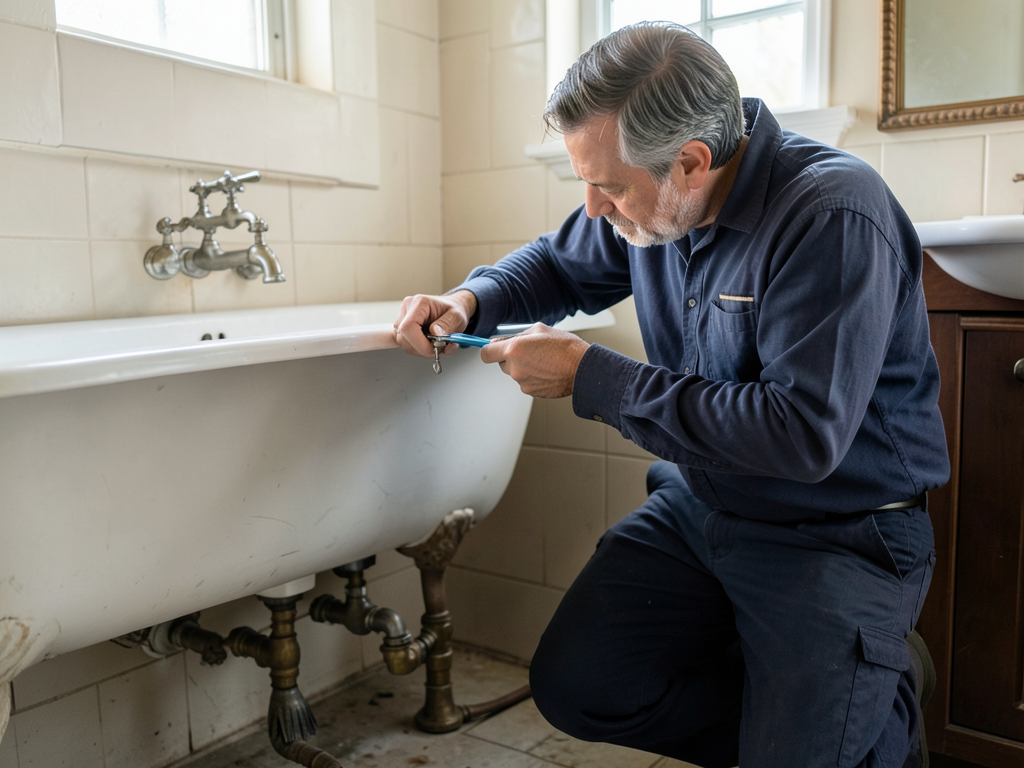
Restoring vs Replacing Antique Clawfoot Tub Fixtures in Carrollton
Carrollton homeowners with vintage clawfoot tubs face a critical choice: restore original fixtures or replace with modern replicas. This guide breaks down the costs, challenges, and best approach for your historic New Orleans home.. Read more about How to Make Your New Orleans Restaurant Bathrooms ADA Compliant.
Understanding Your Carrollton Clawfoot Tub’s Plumbing System
Carrollton’s historic homes, built primarily between 1900 and 1930, feature distinctive plumbing configurations that differ significantly from modern installations. Most original clawfoot tubs in the area use floor-mounted supply lines with exposed riser pipes, a design that requires specific expertise to service properly. Plumbing Slidell.
The typical Carrollton clawfoot setup includes a cast iron tub weighing between 250-400 pounds, floor-mounted faucet assemblies with 3/4-inch supply lines, and a combination waste-and-overflow assembly that often uses brass or early galvanized components. These systems were designed for a different era when water pressure and quality differed substantially from today’s standards. Fast Tankless Water Heater Installation for New Orleans Residents.
Local soil conditions in Carrollton, characterized by alluvial deposits and occasional clay pockets, can affect foundation stability over decades. This settling can stress floor-mounted plumbing connections, leading to leaks at the base where risers meet the floor. Understanding these unique challenges is crucial when deciding between restoration and replacement. Fixing Slab Leaks and Foundation Plumbing in Your Garden District Home.
Common Issues with Antique Clawfoot Tub Fixtures
Several problems commonly affect clawfoot tub fixtures in Carrollton homes. Mineral buildup from New Orleans’ water supply creates stubborn deposits inside valves and stems, reducing flow and causing temperature control issues. The city’s water chemistry, with moderate hardness levels averaging 75-100 ppm, accelerates corrosion on brass and copper components. Fast Water Heater Repair and Replacement Services for Metairie Residents.
Worn valve seats represent another frequent failure point. Original compression-style valves use replaceable seats that become pitted over decades of use. Finding exact matches for these components often requires specialized suppliers or custom machining. The rubber washers and packing materials from the 1920s-1940s have long since deteriorated, causing persistent drips and leaks.
Floor-mounted supply line connections face unique stress patterns. Unlike wall-mounted fixtures, these connections bear the weight of the tub and user, creating shear forces at floor penetrations. In Carrollton’s older homes, original floor seals often consist of lead or tar-based compounds that have lost their sealing properties over 80-100 years.
Restoration: Preserving Original Character
Restoring antique clawfoot tub fixtures involves rebuilding original components while maintaining historical accuracy. This process typically begins with complete disassembly and assessment of each part’s condition. Skilled technicians can often salvage 70-80% of original brass components, including valve bodies, escutcheon plates, and decorative elements.
The restoration process requires specialized tools and techniques unavailable to general plumbers. Valve reseating involves precision grinding to create a perfect sealing surface. Stem threads often need chasing or re-cutting to restore smooth operation. Modern replacement parts rarely match the thread patterns and dimensions of century-old fixtures. Who to Call for a 24 Hour Emergency Plumber in New Orleans.
Cost considerations for restoration typically range from $800-$2,500 depending on the tub’s condition and the extent of required work. This investment preserves the authentic character that makes clawfoot tubs desirable in historic Carrollton homes. However, restoration cannot address fundamental design limitations like the lack of modern pressure-balancing features or water-saving technologies.. Read more about Best High Pressure Showerheads That Still Save Water for New Orleans Residents.
Replacement: Modern Functionality with Vintage Style
Modern replacement fixtures offer improved reliability and performance while maintaining the vintage aesthetic. Contemporary clawfoot tub faucet sets feature ceramic disc valves that eliminate drips and provide smoother operation than original compression valves. These units install using the same floor-mounted configuration as originals.
Quality reproduction fixtures from manufacturers like Strom Plumbing, Kingston Brass, and Cheviot replicate the appearance of early 20th-century designs while incorporating modern materials. Chrome-plated brass construction provides durability that exceeds original zinc or pot metal components. Most reproduction sets include all necessary mounting hardware and detailed installation instructions.
Replacement costs typically range from $400-$1,200 for the fixture set alone, with professional installation adding $300-$600. The total investment often proves lower than comprehensive restoration, especially when considering the likelihood of future repairs. However, replacement sacrifices the irreplaceable patina and craftsmanship of original fixtures. EPA WaterSense Program.
Making the Right Choice for Your Carrollton Home
Several factors influence the restore versus replace decision. The tub’s historical significance plays a crucial role. If your clawfoot tub represents an original feature of a historic Carrollton home, restoration may be necessary to maintain historical integrity for potential preservation tax credits or district compliance.
Usage patterns also matter significantly. A primary bathroom tub used daily benefits from modern replacement reliability, while a guest bathroom fixture might justify restoration investment. Consider whether you value authentic period details over modern convenience features like thermostatic controls or handheld shower attachments.
Budget constraints often dictate the practical choice. Restoration requires skilled labor that commands premium rates, while replacement offers predictable costs and shorter timelines. For homeowners planning to sell within five years, replacement often provides better return on investment through improved reliability and modern appeal.
Technical Considerations for Carrollton Homes
Carrollton’s water pressure typically ranges from 45-65 psi, adequate for most clawfoot tub applications but potentially problematic for original fixtures designed for lower pressures. Modern replacement units include pressure-compensating features that maintain consistent flow regardless of supply variations.
The area’s high humidity levels, averaging 75% annually, accelerate corrosion on exposed plumbing components. Original brass fixtures develop a protective patina over decades, while new brass requires sealing or coating to prevent rapid oxidation. Chrome-plated components resist corrosion better but may not match original aesthetics.
Floor structure in Carrollton’s historic homes often uses 2×6 or 2×8 joists spaced 16 inches on center. These supports must adequately handle the concentrated loads from floor-mounted fixtures. Before any restoration or replacement work, verify that floor penetrations don’t compromise structural integrity or violate current building codes.
Professional Assessment and Next Steps
Before deciding on restoration or replacement, professional assessment reveals the true condition of your clawfoot tub’s plumbing system. A qualified technician examines valve bodies for cracks, checks stem threads for wear, and tests supply line integrity under pressure. This diagnostic process typically takes 30-45 minutes and costs $75-$125.
During assessment, technicians look for specific failure indicators: green corrosion on brass components suggesting electrolysis, white mineral deposits indicating hard water damage, and rust streaks revealing internal corrosion. They also check floor penetration seals for water damage that might indicate slow leaks compromising subfloor integrity.
Based on assessment findings, professionals provide detailed recommendations including part availability, expected repair longevity, and cost comparisons between restoration and replacement options. This information empowers informed decisions aligned with both practical needs and preservation goals.
Installation Considerations for Both Options
Whether restoring or replacing, proper installation requires attention to detail that many general contractors overlook. Floor-mounted fixtures need secure anchoring to prevent movement that could damage supply lines. Original installations often used lead anchors or expansion bolts that no longer meet current building standards.
Supply line sizing matters significantly for performance. Original 3/8-inch lines may restrict flow compared to modern 1/2-inch or 3/4-inch alternatives. However, increasing supply line diameter may require floor penetration modifications that could compromise historic flooring or create new leak paths.
Modern PEX supply lines offer flexibility and corrosion resistance but may not aesthetically match original installations. Some homeowners choose to run new supply lines through walls or along baseboards rather than maintaining the traditional floor-mounted appearance. This approach improves reliability but alters the tub’s historic character.
Cost Comparison and Value Analysis
Cost Factor | Restoration | Replacement | Notes
—|—|—|—|—
Fixture Parts | $200-$800 | $400-$1,200 | Restoration parts often custom
Labor Costs | $600-$1,800 | $300-$600 | Restoration requires specialized skills
Timeline | 2-4 weeks | 1-2 days | Restoration needs parts sourcing
Expected Lifespan | 5-15 years | 15-25 years | Modern materials more durable
Historical Value | Preserves original | Alters character | Consider home’s historic status
Beyond direct costs, consider indirect factors affecting long-term value. Restored fixtures may appeal to purist buyers but could raise concerns about reliability. Modern replacements offer peace of mind but might reduce appeal for buyers seeking authentic historic details. Local real estate trends in Carrollton often favor homes maintaining original character features.
Energy efficiency represents another consideration. Original fixtures lack modern water-saving features, potentially increasing utility costs. However, the water volume used by clawfoot tubs typically exceeds savings from fixture efficiency, making this factor relatively minor in overall cost analysis.
Finding Qualified Professionals in Carrollton
Carrollton’s unique housing stock requires plumbers with specific experience in historic home systems. Look for professionals familiar with New Orleans’ historic preservation guidelines and local building codes affecting antique plumbing. Ask potential contractors about their experience with clawfoot tub repairs and request references from similar projects.
Verify that chosen professionals carry appropriate insurance and licensing for work in historic districts. Some Carrollton neighborhoods have specific requirements for exterior modifications, including plumbing work visible from public spaces. Understanding these regulations prevents costly mistakes and potential fines.
Professional associations like the Preservation Resource Center of New Orleans maintain directories of contractors experienced with historic home maintenance. These resources help identify qualified professionals who understand the balance between modern functionality and historical preservation.
Maintenance and Care for Your Decision
Regardless of whether you choose restoration or replacement, proper maintenance extends fixture life and prevents costly repairs. Original brass fixtures benefit from periodic polishing with non-abrasive cleaners to prevent mineral buildup. Modern chrome fixtures require less maintenance but should be wiped dry after use to prevent water spots.
Supply line connections need annual inspection for signs of leakage or corrosion. Floor-mounted fixtures experience movement from tub use that can gradually loosen connections. Early detection of minor issues prevents major water damage to historic flooring and subfloor structures.
Water quality management helps protect both restored and replaced fixtures. Installing whole-house water softeners or filters reduces mineral buildup and corrosion, extending the life of any plumbing components. Regular flushing of supply lines removes sediment that could clog valve mechanisms.. Read more about How to Remove Those Stubborn Yellow Stains from Your Bathtub in Kenner.
Environmental and Sustainability Considerations
Restoration aligns with sustainability goals by preserving existing materials and reducing landfill waste. Original brass and cast iron components, often over 100 years old, demonstrate remarkable durability when properly maintained. This longevity contrasts with modern fixtures that may require replacement every 15-20 years.
However, modern replacement fixtures offer water conservation features unavailable in original designs. Low-flow aerators and temperature controls reduce water consumption without sacrificing performance. These efficiency improvements may offset the environmental cost of manufacturing new fixtures.
Consider the full lifecycle impact when making your decision. Restoration preserves embodied energy in existing materials but may require ongoing maintenance using harsh chemicals. Replacement creates manufacturing waste but provides longer service life with less intensive maintenance requirements.
Final Recommendations for Carrollton Homeowners
For most Carrollton homeowners, the decision between restoring and replacing antique clawfoot tub fixtures depends on balancing historical value against practical needs. Homes in designated historic districts or those with significant architectural merit generally benefit from restoration, despite higher costs and potential reliability concerns.
Properties where the tub serves as a secondary bathroom feature offer more flexibility. Here, replacement with quality reproduction fixtures often provides the best combination of reliability, cost-effectiveness, and aesthetic compatibility. This approach maintains the vintage appearance while ensuring dependable operation for occasional use.
Consider consulting with a historic preservation specialist before making your final decision. These professionals understand local regulations and can provide insights specific to your home’s construction era and architectural style. Their expertise helps navigate the complex intersection of preservation requirements and modern building codes.
Ready to make your clawfoot tub functional and beautiful again? Call (985) 279-3332 today to schedule a professional assessment. Our Carrollton specialists will evaluate your tub’s condition and provide clear recommendations for restoration or replacement that respect your home’s historic character while meeting your practical needs.
Frequently Asked Questions
How long does clawfoot tub fixture restoration typically take?
Complete restoration usually requires 2-4 weeks, depending on parts availability and the extent of required work. The process includes disassembly, parts cleaning, valve reseating, stem rebuilding, and final reassembly with pressure testing.
Can I install modern fixtures on my existing clawfoot tub without modifications?
Yes, quality reproduction fixtures are designed to fit standard clawfoot tub configurations. Most use the same floor-mounted supply line setup as original fixtures, requiring only basic plumbing connections and secure floor mounting.
What’s the average lifespan of restored versus replaced clawfoot tub fixtures?
Restored fixtures typically last 5-15 years with proper maintenance, while modern replacement fixtures generally provide 15-25 years of reliable service. The difference reflects improvements in materials and manufacturing since the original fixtures were produced. For more information, visit National Park Service Preservation Briefs.
{
“@context”: “https://schema.org”,
“@type”: “BlogPosting”,
“headline”: “Restoring vs Replacing Antique Clawfoot Tub Fixtures in Carrollton”,
“description”: “Carrollton homeowners with vintage clawfoot tubs face a critical choice: restore original fixtures or replace with modern replicas. Learn the costs, challenges, and best approach for your historic New Orleans home.”,
“wordCount”: 2101,
“datePublished”: “2026-05-01T09:18:00.000Z”,
“dateModified”: “2026-05-01T09:18:00.000Z”,
“inLanguage”: “en-US”,
“mainEntityOfPage”: {
“@type”: “WebPage”,
“@id”: “https://libertyplumbingneworleans.com”
},
“publisher”: {
“@type”: “LocalBusiness”,
“name”: “Liberty Plumbing New Orleans”,
“url”: “https://libertyplumbingneworleans.com”
},
“author”: {
“@type”: “Organization”,
“name”: “Liberty Plumbing New Orleans”,
“url”: “https://libertyplumbingneworleans.com”
},
“image”: {
“@type”: “ImageObject”,
“url”: “https://libertyplumbingneworleans.com/wp-content/uploads/2026/03/restoring-vs-replacing-antique-clawfoot-tub-fixtur-1.png”
}
}
{
“@context”: “https://schema.org”,
“@type”: “Plumber”,
“name”: “Liberty Plumbing New Orleans”,
“url”: “https://libertyplumbingneworleans.com”,
“address”: {
“@type”: “PostalAddress”,
“addressLocality”: “New Orleans”
},
“areaServed”: {
“@type”: “City”,
“name”: “New Orleans”
}
}
{
“@context”: “https://schema.org”,
“@type”: “FAQPage”,
“mainEntity”: [
{
“@type”: “Question”,
“name”: “How long does clawfoot tub fixture restoration typically take?”,
“acceptedAnswer”: {
“@type”: “Answer”,
“text”: “Complete restoration usually requires 2-4 weeks, depending on parts availability and the extent of required work. The process includes disassembly, parts cleaning, valve reseating, stem rebuilding, and final reassembly with pressure testing.”
}
},
{
“@type”: “Question”,
“name”: “Can I install modern fixtures on my existing clawfoot tub without modifications?”,
“acceptedAnswer”: {
“@type”: “Answer”,
“text”: “Yes, quality reproduction fixtures are designed to fit standard clawfoot tub configurations. Most use the same floor-mounted supply line setup as original fixtures, requiring only basic plumbing connections and secure floor mounting.”
}
},
{
“@type”: “Question”,
“name”: “What’s the average lifespan of restored versus replaced clawfoot tub fixtures?”,
“acceptedAnswer”: {
“@type”: “Answer”,
“text”: “Restored fixtures typically last 5-15 years with proper maintenance, while modern replacement fixtures generally provide 15-25 years of reliable service. The difference reflects improvements in materials and manufacturing since the original fixtures were produced. For more information, visit National Park Service Preservation Briefs.”
}
}
]
}
{
“@context”: “https://schema.org”,
“@type”: “BreadcrumbList”,
“itemListElement”: [
{
“@type”: “ListItem”,
“position”: 1,
“name”: “Home”,
“item”: “https://libertyplumbingneworleans.com”
},
{
“@type”: “ListItem”,
“position”: 2,
“name”: “Blog”,
“item”: “https://libertyplumbingneworleans.com/blog”
},
{
“@type”: “ListItem”,
“position”: 3,
“name”: “Restoring vs Replacing Antique Clawfoot Tub Fixtures in Carrollton”
}
]
}
{
“@context”: “https://schema.org”,
“@type”: “Service”,
“serviceType”: “Plumbing”,
“provider”: {
“@type”: “LocalBusiness”,
“name”: “Liberty Plumbing New Orleans”,
“url”: “https://libertyplumbingneworleans.com”
},
“areaServed”: {
“@type”: “City”,
“name”: “New Orleans”
},
“description”: “Carrollton homeowners with vintage clawfoot tubs face a critical choice: restore original fixtures or replace with modern replicas. Learn the costs, challenges, and best approach for your historic New Orleans home.”
}