




menu

Emergency Basement Flooding Pump-Out in New Orleans – 24/7 Response Teams Dispatched in Under 60 Minutes

Liberty Plumbing New Orleans deploys industrial-grade submersible pumps and extraction equipment to stop rising water, protect your foundation, and prevent mold growth before structural damage occurs in your flooded basement.

Slider Image 1
Slider Image 2
Slider Image 3
Slider Image 4
Slider Image 5
Slider Image 7
Slider Image 8
Slider Image 9
Slider Image 10
Slider Image 11

Why New Orleans Basements Flood Fast and Without Warning

Your basement is underwater. You are watching water climb the walls while your belongings float past. This is not just bad luck. This is New Orleans geography working against you.

The city sits below sea level in a bowl surrounded by Lake Pontchartrain, the Mississippi River, and saturated wetlands. When tropical storms roll through or thunderstorms dump four inches in an hour, the water table rises fast. The pump stations struggle. The soil cannot absorb another drop. That pressure finds your basement through foundation cracks, failed sump pumps, or overwhelmed street drainage backing up through floor drains.

You are dealing with contaminated floodwater mixed with sewage, chemicals, and bacteria. Every minute that water sits, it seeps deeper into drywall, insulation, and wooden floor joists. Mold spores activate within 24 to 48 hours in our humidity. Your HVAC system pulls those spores through the entire house. Your foundation footings weaken as hydrostatic pressure builds against compromised concrete.

Emergency basement water removal requires industrial submersible pumps that move thousands of gallons per hour, not a wet vac and hope. You need flooded basement extraction service that removes standing water, then pulls moisture from porous materials before secondary damage starts. You need it now, not tomorrow morning. Liberty Plumbing New Orleans runs 24/7 emergency flood pumping operations because basement water pump out service in this city cannot wait for business hours. Flooded basement water removal services must start immediately or you will spend the next six months fighting mold remediation contractors and insurance adjusters.

Why New Orleans Basements Flood Fast and Without Warning
How Professional Pump-Out Teams Stop Water Damage in Its Tracks

How Professional Pump-Out Teams Stop Water Damage in Its Tracks

You cannot shop vac your way out of a flooded basement. Professional emergency basement water removal uses staged extraction protocols designed for high-volume water displacement and contamination control.

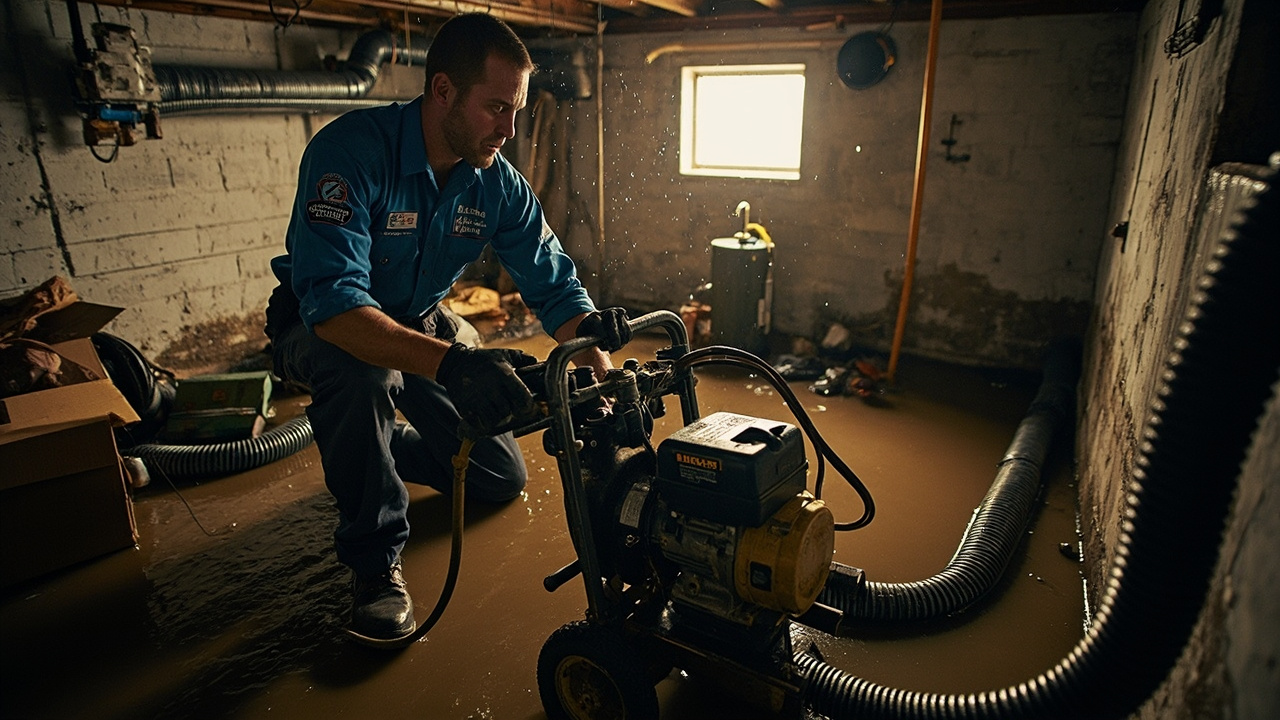
Our crews arrive with truck-mounted pumps capable of moving 200 gallons per minute through three-inch discharge hoses. We position submersible pumps at the lowest point of your basement, creating a collection zone that pulls water away from walls and mechanical systems. These are not hardware store sump pumps. These are contractor-grade units built for continuous operation under debris load.

We pump to the street storm drain or sanitary cleanout, never onto your lawn where it will just seep back through the foundation. As water levels drop, we deploy wet vacuums with HEPA filtration to extract moisture from carpets and concrete. We pull baseboards to check for wicking in the drywall. We document moisture readings with infrared cameras and pin-type meters, mapping the affected area for insurance documentation.

Flooded basement extraction service includes identifying the water source. Was it a burst supply line? A failed ejector pump? Groundwater intrusion through a foundation crack? Street sewer backup through the floor drain? Each source requires a different remediation approach. We locate the entry point, stop the inflow, then complete the pump out.

Emergency flood pumping often reveals hidden plumbing failures like corroded galvanized drain lines or failed backwater valves. We flag these issues immediately because another storm is always coming in New Orleans. Our basement water pump out service includes temporary shoring if we find compromised structural members and coordination with your insurance adjuster while the scene is still active.

What Happens When You Call for Emergency Pump-Out

Emergency Basement Flooding Pump-Out in New Orleans – 24/7 Response Teams Dispatched in Under 60 Minutes
01

Immediate Dispatch and Assessment

You call our emergency line. We dispatch the nearest truck within 15 minutes. Our technician arrives with pump equipment, moisture meters, and safety gear. He evaluates water depth, identifies the source, checks for electrical hazards, and begins containment while explaining the extraction plan. You get a verbal timeline and damage assessment before pumps start running.
02

High-Volume Water Extraction

We deploy submersible pumps rated for the water volume and contamination level in your basement. Pumps run continuously until standing water is removed. We reposition equipment as levels drop to capture water pooling in corners or under stairs. We monitor discharge to prevent street flooding and adjust flow rates to match drainage capacity in your neighborhood.
03

Moisture Removal and Documentation

Once standing water is gone, we extract embedded moisture from concrete, subfloors, and wall cavities using commercial wet vacuums and air movers. We document moisture levels with thermal imaging and provide a written report with photos for your insurance claim. We recommend next steps for mold prevention, structural drying, and permanent fixes to prevent future flooding.

Why New Orleans Property Owners Call Liberty Plumbing for Basement Flooding Emergencies

You need a company that understands how water moves through below-grade spaces in a city built on drained swamp. Liberty Plumbing New Orleans has pumped out basements in Lakeview after sudden thunderstorms, in the Marigny after the pumps failed, and in Mid-City when the water table pushed groundwater through foundation walls.

We know that basements here flood differently than in cities built on bedrock. The water comes up through the slab, not just down through windows. It brings contamination from century-old sewer laterals and street runoff mixed with chemicals from adjacent industrial properties. Our flooded basement water removal services account for these local contamination risks with proper PPE and disposal protocols.

Our trucks carry enough pump capacity to handle whole-house flooding, not just a wet corner. We stock three-inch discharge hoses, trash pumps for debris-laden water, and clear-water submersibles for final extraction. We arrive prepared because we have seen how fast a basement fills when the street backs up during a six-inch rain event.

We coordinate with local adjusters who know the flood insurance rules in Orleans Parish. We document everything because FEMA claims and standard homeowner policies treat basement flooding differently. We provide the moisture maps, extraction logs, and photo documentation your adjuster needs to process the claim without delay.

You will work with the same local dispatch and field crews every time, not a rotating call center in another state. Our technicians live in Metairie, Kenner, and Chalmette. They have pumped out their own basements. They understand the urgency because they know what six hours of standing water does to a house in 90 percent humidity.

What to Expect During Emergency Basement Pump-Out Service

Response Time and Availability

We dispatch emergency crews 24 hours a day, 365 days a year. When you call our line, you reach a live dispatcher who sends the nearest available truck. Most emergency basement water removal calls in Orleans and Jefferson Parish receive a technician on-site within 60 minutes. During major storm events, we prioritize calls based on water depth, contamination risk, and electrical hazards. You will receive a callback with an estimated arrival time within 10 minutes of your initial call. We do not schedule next-day appointments for active flooding.

On-Site Evaluation and Safety Check

Our technician performs a safety assessment before starting pump-out operations. He checks for electrical hazards, gas leaks, and structural instability. He identifies the water source and determines whether the flooding is clean water from a supply line, gray water from an appliance, or black water containing sewage. This classification determines extraction methods, disposal requirements, and contamination protocols. He explains what he finds, outlines the extraction process, and provides a verbal estimate for emergency services before beginning work. You receive clear information while the scene is active.

Complete Water Removal and Drying

Professional basement water pump out service removes standing water, then addresses moisture trapped in building materials. Our crews extract water until moisture meters show readings approaching normal levels for New Orleans humidity. We position air movers and dehumidifiers if you request drying services. We remove debris and dispose of contaminated materials according to local waste management rules. Your basement will be empty of standing water and documented for insurance purposes. We provide a written moisture report showing before and after readings so you can track drying progress and prove loss to your carrier.

Follow-Up and Prevention Planning

After emergency flood pumping is complete, we schedule a follow-up inspection to check drying progress and identify permanent fixes. We provide recommendations for sump pump installation, backwater valve upgrades, foundation crack repair, and French drain systems. Many basement flooding events in New Orleans are preventable with proper drainage infrastructure. We connect you with trusted contractors for mold remediation, structural drying, and foundation work if needed. You receive a written report outlining recommended improvements to prevent future flooding, along with documentation of the emergency services performed for your insurance claim and property records.

Frequently Asked Questions

You Have Questions,
We Have Answers

How to pump water out of a flooded basement? +

Turn off all electricity to your basement immediately to prevent electrocution. Locate the main source of water and stop it if possible. Use a submersible pump or wet vacuum to remove standing water, starting from the deepest area. For severe flooding in New Orleans, where hurricanes and heavy rain cause sudden water intrusion, call a professional extraction service fast. They use industrial pumps to remove thousands of gallons quickly. Do not wade through deep water. Work in sections, and remove furniture or valuables as water lowers. Document everything with photos for insurance claims.

How much does it cost to pump out a flooded basement? +

Basement pump-out costs in New Orleans range widely based on water depth, square footage, and contamination level. Minor flooding with clean water may cost less than severe storm flooding with sewage backup. Professional extraction typically involves equipment fees, labor, and disposal costs. You also face drying, sanitizing, and potential mold remediation expenses after water removal. New Orleans homes near Lake Pontchartrain or low-lying areas often require more intensive cleanup. Get multiple estimates quickly during an emergency. Most companies offer 24/7 pricing. Your homeowner's insurance may cover costs if the flood resulted from a covered event like storm surge.

Should you pump out the basement rapidly if it is flooded to avoid standing water? +

No. Pumping out a flooded basement too fast creates dangerous pressure imbalance. Surrounding saturated soil pushes against your foundation walls while interior pressure drops, causing cracks, buckling, or total collapse. In New Orleans, where high water tables and clay soils are common, this risk intensifies. Pump out water slowly, removing about one-third per day over three days. Mark the water level with tape and monitor progress. If you see new cracks or wall bowing, stop immediately and call a structural engineer. Patience protects your foundation and prevents a bigger disaster than the flood itself.

How to remove 2 inches of water from a basement? +

For shallow flooding, use a wet vacuum or mop and bucket to remove two inches of standing water. Start at the lowest point and work toward drains. A small utility pump also works for faster removal in larger basements. After extracting water, use fans and dehumidifiers immediately to dry floors, walls, and belongings. New Orleans humidity makes drying critical within 24 to 48 hours to prevent mold growth. Remove wet carpeting, padding, and baseboards. Sanitize all surfaces with antimicrobial cleaner. Even minor flooding can cause hidden moisture damage in porous materials like drywall and insulation.

What to do immediately after a basement flood? +

Shut off electricity at the breaker panel before entering. Document flood damage with photos and videos for insurance. Call your insurance company immediately to report the claim. Remove standing water as safely as possible. Move furniture, electronics, and valuables to dry areas. Open windows and start airflow with fans if weather permits. In New Orleans, where mold thrives in heat and humidity, speed is critical. Contact a professional water extraction service for anything beyond minor seepage. Do not use bleach on porous surfaces yet. Focus on water removal first, sanitizing second. Time is your enemy.

What kind of pump do I need for a flooded basement? +

You need a submersible sump pump rated for the water depth and volume. For minor flooding, a half-horsepower pump handles most residential basements. For severe storm flooding in New Orleans, use a high-capacity trash pump or commercial extractor that moves thousands of gallons per hour. Avoid standard sump pumps if water contains debris or sewage. Make sure the pump has a long enough discharge hose to move water far from your foundation. Battery backup pumps help during power outages, which are common after hurricanes. Rent professional-grade equipment or call an extraction company for major flooding.

Will insurance pay for a flooded basement? +

Maybe. Homeowner's insurance typically covers sudden, accidental water damage like burst pipes or appliance failures. It usually excludes flooding from external sources like storm surge, heavy rain, or rising groundwater. In New Orleans, where hurricanes and tropical storms cause frequent flooding, you need separate flood insurance through the National Flood Insurance Program. Review your policy immediately. Document all damage with photos. File your claim fast, even if you are unsure about coverage. Adjusters evaluate each case individually. Sewer backup coverage is often an optional endorsement. Check your declarations page or call your agent now.

How long does it take to pump water out of a basement? +

Pump-out time depends on water volume, pump capacity, and basement size. A small basement with a few inches of water may take two to four hours with a quality submersible pump. Severe flooding with several feet of water can take 12 to 24 hours or longer using industrial equipment. In New Orleans, where basements are rare but crawl spaces flood, extraction still requires careful pacing to avoid foundation damage. Never rush the process. Pump slowly over multiple days if water is deep. Professional services coordinate multiple pumps and monitor structural stability throughout the process.

Will a flooded basement dry on its own? +

No. A flooded basement will not dry safely on its own. Standing water seeps into porous materials like drywall, insulation, and wood framing. In New Orleans, where humidity stays high year-round, moisture becomes a breeding ground for mold within 24 to 48 hours. Structural damage worsens as materials stay wet. You must actively remove water, then use dehumidifiers and air movers to extract moisture from building materials. Ignoring a flood leads to toxic mold, rotted framing, ruined belongings, and expensive repairs. Act immediately. Passive drying does not work in this climate.

What is the #1 cause of basement flooding? +

Heavy rainfall overwhelming drainage systems causes most basement flooding. In New Orleans, intense storms dump inches of rain in hours, saturating soil and pushing groundwater up through basement floors and walls. Inadequate grading, clogged gutters, failed sump pumps, and cracked foundations also contribute. Homes near Lake Pontchartrain or in low-lying neighborhoods face higher risk. Storm surge from hurricanes compounds the problem. Many New Orleans properties lack proper French drains or exterior waterproofing. Poor lot drainage directs water toward foundations instead of away. Regular maintenance of gutters, sump pumps, and grading prevents most flooding incidents.

Why Below-Sea-Level Geography Makes New Orleans Basement Flooding Uniquely Dangerous

New Orleans sits in a bowl below sea level, surrounded by water on three sides and dependent on pump stations to remove rainwater. When tropical storms saturate the ground or pump stations lose power, basements flood fast because groundwater pressure overwhelms foundation walls built in clay soil. The contamination risk is higher here because older neighborhoods have combined sewer systems where street runoff mixes with sanitary waste. Emergency basement water removal in this city must account for black water contamination, rapid mold growth in high humidity, and structural stress from hydrostatic pressure against foundations never designed for extended submersion. You cannot wait for the water to recede on its own.

Liberty Plumbing New Orleans operates under the same Louisiana State Plumbing Code and Orleans Parish permits that govern all emergency water extraction and plumbing repairs in the city. Our technicians understand local drainage infrastructure, know which neighborhoods flood first during heavy rain, and coordinate with the Sewerage and Water Board when street-level backups cause basement flooding. We provide documentation that meets Louisiana flood insurance requirements and FEMA disaster assistance standards. Choosing a local company means working with crews who understand how this city floods and what it takes to protect your property when the water rises.

Plumbing Services in The New Orleans Area

Liberty Plumbing proudly serves New Orleans and surrounding areas with dependable plumbing services available 24/7. Use the map below to locate our service area and see how close we are to your home or business. Whether you need emergency repairs or scheduled maintenance, we’re nearby and ready to help. Our team is local, friendly, and always prepared to respond when you need us most. Don’t wait for a plumbing issue to get worse—get fast, professional help from Liberty Plumbing today.

Address:
Liberty Plumbing New Orleans, 201 St Charles Ave, New Orleans, LA, 70170

Additional Services We Offer

Our news updates

Latest Articles & News from The Blogs

Common Plumbing Issues for Homeowners Using Well Water in Rural St. Bernard Parish Living in rural St. Bernard Parish means…

Common Plumbing Issues for Homeowners Using Well Water in Rural St. Bernard Parish

Common Plumbing Issues for Homeowners Using Well Water in Rural St. Bernard Parish Living in rural St. Bernard Parish means…

Dealing with Standing Water in Your Yard After a Typical New Orleans Rainstorm

Dealing with Standing Water in Your Yard After a Typical New Orleans Rainstorm Living in New Orleans means dealing with…

How to Make Your New Orleans Restaurant Bathrooms ADA Compliant

How to Make Your New Orleans Restaurant Bathrooms ADA Compliant Running a restaurant in New Orleans means navigating historic buildings,…

Contact Us

Your basement is flooding right now. Every minute you wait increases the damage and the cost. Call Liberty Plumbing New Orleans at (985) 279-3332 for immediate dispatch. Our emergency crews are standing by with industrial pumps and extraction equipment to stop the water before your foundation fails.