





menu

Medical & Dental Gas Plumbing in New Orleans – Zero-Downtime Installation for Critical Healthcare Facilities

Certified medical gas pipeline services engineered for hospitals, surgical centers, and dental practices across New Orleans. We deliver compliant, phased installations that keep your facility operational and your patients safe.

Slider Image 1
Slider Image 2
Slider Image 3
Slider Image 4
Slider Image 5
Slider Image 7
Slider Image 8
Slider Image 9
Slider Image 10
Slider Image 11

Why Medical Gas Systems Demand Specialized Expertise in New Orleans Healthcare Facilities

Medical gas piping systems are not standard plumbing. They operate under strict NFPA 99 protocols, require ASSE 6010 certification, and must pass rigorous third-party testing before the first patient walks through your doors. In New Orleans, where healthcare facilities serve a dense urban population and aging infrastructure often requires retrofits in buildings not originally designed for modern medical gas delivery, the margin for error is nonexistent.

A single contaminated oxygen line can compromise an entire surgical suite. A pressure drop in nitrous oxide delivery can halt dental procedures. A faulty zone valve can trigger a facility-wide emergency response. These are not theoretical risks. They are compliance failures that result in state citations, operational shutdowns, and liability exposure.

New Orleans medical facilities face additional challenges. High humidity accelerates corrosion in copper lines if installation protocols are not followed precisely. Buildings in the Central Business District and Uptown often have limited mechanical chase space, requiring creative routing solutions that still meet code. Storm-related power disruptions mean your medical gas systems must integrate seamlessly with emergency backup protocols.

You need certified med gas plumbers who understand NFPA 99, Louisiana State Plumbing Code Chapter 13, and the specific demands of operating in a Gulf Coast environment. You need medical gas pipeline services that deliver verifiable compliance documentation, not just a certificate on the wall. You need a partner who has installed dental gas piping in functional facilities where downtime is not an option.

Why Medical Gas Systems Demand Specialized Expertise in New Orleans Healthcare Facilities
How We Engineer Compliant Medical Gas Installations Without Disrupting Patient Care

How We Engineer Compliant Medical Gas Installations Without Disrupting Patient Care

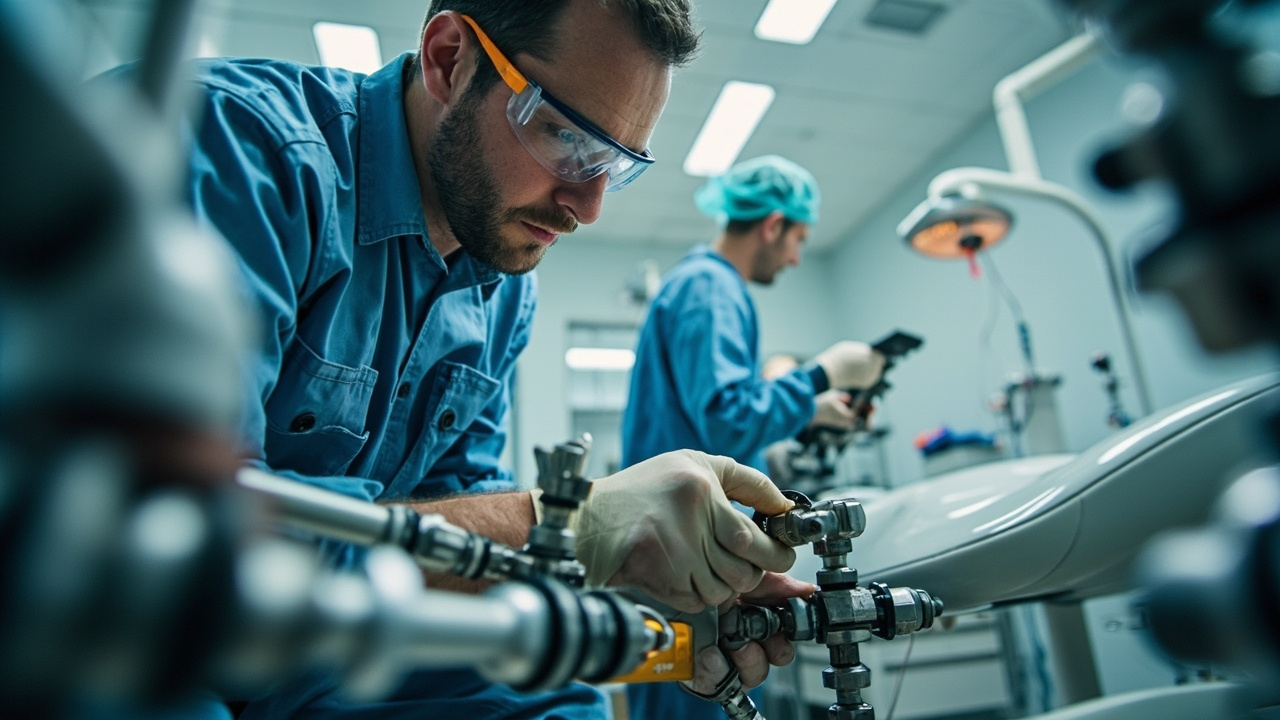
Our med gas installation services follow a phased approach designed to isolate work zones, maintain redundancy, and verify every connection before it goes live. We do not shut down your facility. We work around your patient schedule.

First, we conduct a full facility audit. We map existing medical gas piping systems, identify code deficiencies, and develop a routing plan that minimizes wall penetrations and maximizes access for future maintenance. In older New Orleans buildings, this often means coordinating with structural engineers to verify load paths and avoid conflicts with electrical and HVAC systems already competing for limited space.

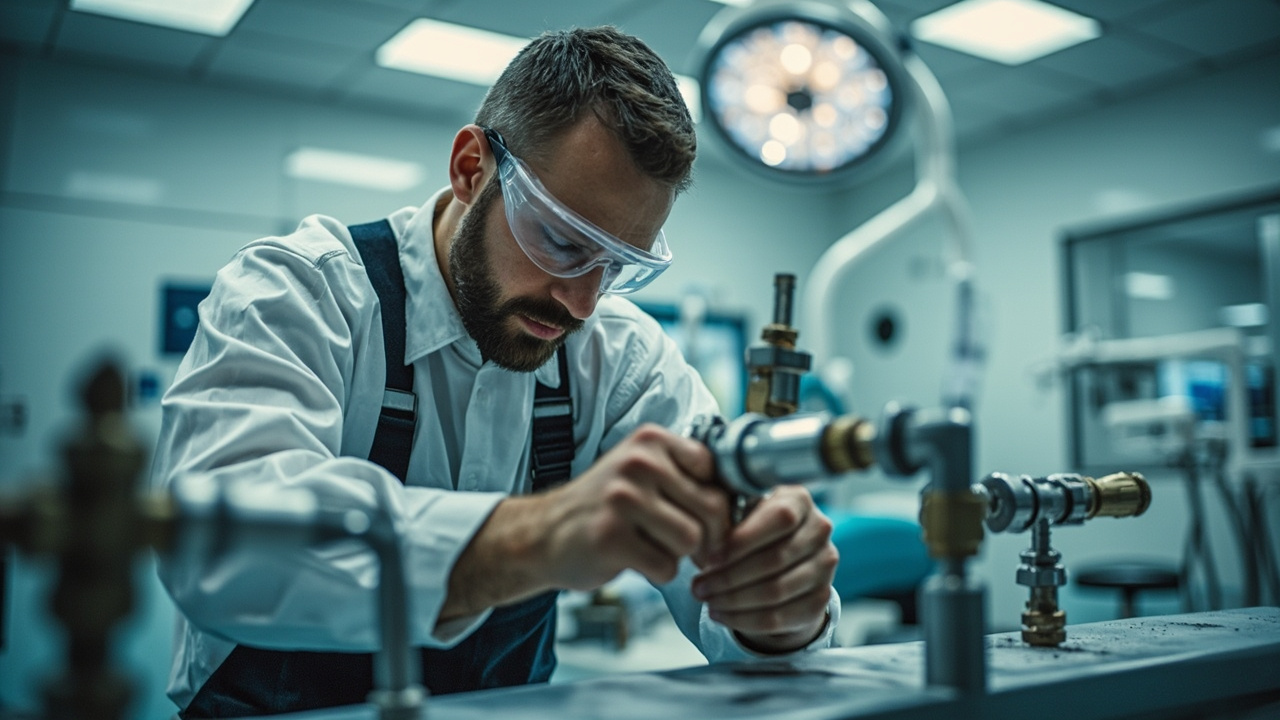
Next, we fabricate and pre-assemble components off-site whenever possible. Medical gas pipeline runs are brazed in controlled conditions, visually inspected, and pressure-tested before installation. This reduces on-site labor hours and minimizes exposure to contaminants. We use medical-grade copper tubing, not repurposed refrigeration line. We use dielectric unions to prevent galvanic corrosion. We label every valve, every regulator, and every alarm panel to NFPA 99 standards.

During installation, we maintain positive pressure isolation on active lines. Dental gas piping for nitrous oxide and oxygen gets installed during off-hours or between patient blocks. Surgical suites get phased cutovers with redundant temporary supply if needed. Every brazed joint is purged with nitrogen to prevent oxidation. Every connection is leak-tested with a calibrated gauge, not soapy water.

Finally, we bring in an independent third-party verifier to conduct the required ASSE 6040 inspection. This is not optional. It is the only way to achieve legal compliance and protect your license.

What Happens During a Medical Gas System Installation

Medical & Dental Gas Plumbing in New Orleans – Zero-Downtime Installation for Critical Healthcare Facilities
01

Site Assessment and Design

We begin with a detailed facility walkthrough to map your existing infrastructure, identify patient care zones, and determine optimal routing for medical gas pipeline services. You receive a stamped design plan that meets Louisiana state code, NFPA 99, and your facility's operational requirements. We coordinate with your clinical staff to establish work windows that will not disrupt scheduled procedures or patient flow.
02

Phased Installation and Testing

Our certified med gas plumbers install medical-grade copper lines using nitrogen-purged brazing techniques to eliminate internal oxidation. Each zone is pressure-tested independently before integration. We install manifold systems, zone valves, and alarm panels in sequence, maintaining active service to occupied areas. Every component is labeled, every connection is documented, and every system is verified for flow, pressure, and purity before commissioning.
03

Verification and Certification

A third-party ASSE 6040 inspector conducts the required final verification, including cross-connection testing, pressure decay testing, and gas purity analysis. You receive a comprehensive compliance package with test reports, material certifications, and as-built drawings. This documentation is what the state surveyor reviews during your facility inspection. Without it, your license is at risk. We ensure you pass the first time.

Why New Orleans Healthcare Facilities Trust Liberty Plumbing for Medical Gas Compliance

Medical gas systems are not forgiving. A plumber who installs residential water lines cannot legally install medical gas piping systems. The skill sets are different. The codes are different. The liability is exponentially higher. You need a team with active ASSE 6010 Medical Gas Installer certification and a documented track record of passing third-party inspections on the first attempt.

We have installed dental gas piping in practices across Metairie and Uptown. We have retrofitted surgical suites in facilities along Jefferson Highway. We have worked in buildings where the mechanical rooms flood during heavy rain and where the existing infrastructure dates to the 1970s. We understand the local challenges because we work here exclusively.

New Orleans healthcare facilities operate in a regulatory environment with zero tolerance for shortcuts. The Louisiana State Plumbing Board enforces strict licensing requirements. The Louisiana Department of Health conducts unannounced inspections. A failed inspection does not just result in a fine. It can trigger an immediate cease-and-desist order that shuts down your facility until compliance is restored. That is lost revenue, rescheduled patients, and reputational damage you cannot afford.

We provide turnkey medical gas pipeline services with documented compliance at every step. You receive material certifications for every component. You receive pressure test reports for every zone. You receive third-party verification reports that satisfy state surveyors. We do not hand you a bill and walk away. We hand you a compliance package that protects your facility and your license.

When you hire Liberty Plumbing New Orleans, you hire certified med gas plumbers who understand what is at stake and who have the credentials to prove it.

What to Expect When You Partner with Us for Medical Gas Installation

Project Timeline and Scheduling

Medical gas projects are phased to minimize disruption. A small dental practice installation typically takes three to five days, with work scheduled around patient appointments. Larger hospital retrofits can span weeks or months, depending on scope and facility occupancy. We provide a detailed project schedule before work begins, with clearly defined milestones and cutover dates. You know exactly when each zone will be offline and when it will return to service. We meet deadlines because your patient schedule depends on it.

Initial Facility Assessment

We conduct a walk-through with your facility manager or clinical director to understand your current medical gas infrastructure, identify deficiencies, and determine the scope of work required to achieve compliance. You receive a written assessment that outlines code violations, recommended upgrades, and a clear path to passing third-party verification. This is not a sales pitch. This is a technical evaluation performed by certified med gas plumbers who understand NFPA 99 and Louisiana state code. You get facts, not estimates padded with unnecessary work.

Compliance Documentation Package

Upon project completion, you receive a comprehensive compliance binder that includes material certifications, pressure test reports, brazing logs, gas purity analysis, third-party verification reports, and as-built drawings. This is the documentation that state surveyors require during facility inspections. It is also the documentation your insurance carrier may request if a claim is ever filed. We organize it, label it, and deliver it in a format that satisfies regulatory requirements. You do not have to chase down paperwork or reconstruct records years later.

Ongoing Maintenance and Emergency Support

Medical gas systems require periodic maintenance to remain compliant. Manifolds need inspection. Alarm panels need testing. Zone valves need verification. We offer scheduled maintenance contracts tailored to your facility type and usage patterns. If an emergency occurs, a failed regulator or a triggered low-pressure alarm, we respond immediately. Medical gas failures are not routine service calls. They are life-safety events. We treat them as such, with rapid dispatch and on-call availability that keeps your facility operational and your patients safe.

Frequently Asked Questions

You Have Questions,
We Have Answers

What is medical gas plumbing? +

Medical gas plumbing involves the installation, maintenance, and repair of specialized piping systems that deliver gases like oxygen, nitrous oxide, nitrogen, and medical air to patient care areas. These systems demand strict compliance with NFPA 99 and CMS regulations. In New Orleans healthcare facilities, medical gas systems require Type K or L copper tubing, brazed joints, and rigorous pressure testing to prevent contamination or leaks. The systems include zone valves, alarm panels, and outlet stations. Proper installation prevents liability issues and ensures patient safety. Only certified contractors with medical gas endorsements should handle these systems in your facility.

What are the 5 classes of medical gas piping? +

NFPA 99 classifies medical gas systems into three categories, not five. Category 1 systems serve spaces where failure poses immediate life safety risks like operating rooms and ICUs. Category 2 systems support areas where loss causes significant risk but not immediate danger. Category 3 systems serve minimal-risk spaces like administrative zones. New Orleans medical facilities must document which category applies to each zone for compliance audits. The classification dictates inspection frequency, testing protocols, and alarm requirements. Misclassifying a zone creates liability exposure and regulatory violations that can shut down operations.

What type of pipe is used for medical gas? +

Medical gas systems require Type K or L seamless copper tubing with brazed connections. Type K provides the thickest walls for maximum durability. Type L offers a cost-effective alternative for most applications. Both types resist corrosion and contamination. In New Orleans facilities, the high humidity demands proper brazing technique to prevent oxidation during installation. Stainless steel tubing serves as an alternative in specific applications. All materials must meet ASTM B819 standards. Threaded connections are prohibited because they create contamination risks. Documentation of material certification is mandatory for inspections and compliance verification.

What is gas plumbing called? +

Gas plumbing is called pipefitting when referring to the trade itself. Medical gas work requires specialized certification beyond standard plumbing licensure. Professionals who install medical gas systems are medical gas installers or medical gas verifiers. In New Orleans, these technicians must hold ASSE 6010 or NITC certification to legally work on healthcare gas systems. The term distinguishes this work from standard natural gas or propane plumbing. Medical gas installers follow stricter protocols, including brazing requirements, purity testing, and cross-connection prevention. The specialized nature of this work commands higher rates and requires ongoing continuing education.

What is the highest paid type of plumber? +

Medical gas installers and pipefitters specializing in healthcare systems rank among the highest-paid plumbing professionals, earning $70,000 to $110,000 annually depending on certification level and experience. New Orleans medical facilities pay premium rates for certified technicians because the work requires ASSE 6010 certification, extensive testing protocols, and regulatory knowledge. Industrial pipefitters working on refineries or petrochemical facilities along the Gulf Coast also command high wages. The liability exposure, specialized training requirements, and consequences of errors justify the higher compensation. Demand consistently exceeds supply for qualified medical gas technicians in the region.

What is an example of a medical gas? +

Medical oxygen is the most common medical gas, used for respiratory support and anesthesia delivery. It is stored as a compressed gas or liquid and delivered through wall outlets at patient bedsides. In New Orleans hospitals and surgical centers, oxygen systems require dedicated copper piping with pressure regulation to maintain 50-55 PSI at outlets. The gas must meet USP purity standards of 99.5 percent. Other examples include nitrous oxide for anesthesia, medical air for ventilators, nitrogen for surgical tools, and carbon dioxide for insufflation during laparoscopic procedures. Each gas requires separate piping networks.

What are the three types of plumbing pipes? +

The three primary plumbing pipe materials are copper, PVC, and PEX. Copper provides durability and heat resistance for water supply lines and medical gas systems. PVC serves drain, waste, and vent applications because it resists corrosion and chemical damage. PEX offers flexible installation for residential water distribution. In New Orleans commercial buildings, copper dominates for supply lines due to building code requirements and longevity in high-humidity environments. Medical facilities exclusively use copper for gas systems. Drain systems typically combine PVC with cast iron for vertical stacks. Material selection depends on application, building codes, and system pressure requirements.

What is a Category 2 medical gas? +

Category 2 medical gas systems serve spaces where interruption causes significant risk but not immediate life-threatening situations. Examples include patient rooms, recovery areas, and emergency departments where alternate oxygen sources exist. In New Orleans healthcare settings, Category 2 zones require alarm systems that signal to a monitored location but allow slightly longer response times than Category 1. The systems still demand rigorous testing, documentation, and maintenance schedules. Zone valves must be clearly labeled and accessible. Facilities face regulatory citations if they misclassify zones or fail to maintain proper alarm monitoring for Category 2 systems.

What are 20 types of gases? +

Common gases include oxygen, nitrogen, hydrogen, helium, neon, argon, krypton, xenon, radon, fluorine, chlorine, carbon dioxide, carbon monoxide, methane, propane, butane, ammonia, nitrous oxide, sulfur dioxide, and ozone. Medical facilities in New Orleans primarily handle oxygen, nitrous oxide, nitrogen, medical air, and carbon dioxide. Industrial facilities along the Mississippi River corridor handle many others for manufacturing processes. Each gas requires specific handling, storage, and piping protocols. Medical gases demand pharmaceutical-grade purity and dedicated distribution systems. Mixing gases or using improper materials creates safety hazards and regulatory violations.

Can schedule 40 PVC be used for gas? +

No. Schedule 40 PVC cannot be used for medical gas or fuel gas systems. Medical gas requires Type K or L copper with brazed joints per NFPA 99. Natural gas and propane demand black iron, corrugated stainless steel tubing, or approved PE pipe for underground service. PVC serves drain, waste, and vent applications only. Using PVC for gas creates catastrophic failure risks, including ruptures, leaks, and fire hazards. New Orleans building inspectors will red-tag any installation using improper materials for gas service. The liability exposure for using wrong materials is extreme.

Why New Orleans Medical Facilities Require Specialized Corrosion-Resistant Gas Line Installation

New Orleans operates in a Gulf Coast environment where humidity routinely exceeds 80 percent and salt-laden air accelerates oxidation in improperly installed copper lines. Medical gas piping systems that are not brazed with nitrogen purging will develop internal scale, which can migrate downstream and contaminate oxygen delivery to patient rooms. Buildings in the French Quarter and Warehouse District often lack climate-controlled mechanical spaces, exposing gas lines to temperature swings and condensation. Certified med gas plumbers understand these environmental factors and apply corrosion-prevention techniques that standard plumbing does not require.

Louisiana State Plumbing Code Chapter 13 requires ASSE 6010 certification for anyone installing medical gas pipeline services, and the state plumbing board enforces this strictly. Local healthcare inspectors are familiar with the compliance failures that occur when unlicensed contractors attempt medical gas work, and they scrutinize third-party verification reports closely. Facilities that hire certified local teams with documented installation experience in New Orleans pass inspections faster and avoid costly rework. Community reputation matters in healthcare, and your choice of contractor reflects directly on your facility's commitment to patient safety and regulatory compliance.
Plumbing Services in The New Orleans Area

Liberty Plumbing proudly serves New Orleans and surrounding areas with dependable plumbing services available 24/7. Use the map below to locate our service area and see how close we are to your home or business. Whether you need emergency repairs or scheduled maintenance, we’re nearby and ready to help. Our team is local, friendly, and always prepared to respond when you need us most. Don’t wait for a plumbing issue to get worse—get fast, professional help from Liberty Plumbing today.

Address:
Liberty Plumbing New Orleans, 201 St Charles Ave, New Orleans, LA, 70170

Additional Services We Offer

Our news updates

Latest Articles & News from The Blogs

Damp Spots on Your Drywall in Lakeview: What They Mean and How to Fix Them Finding damp spots on your…

Troubleshooting the Mystery of Damp Spots on Your Drywall in Lakeview

Damp Spots on Your Drywall in Lakeview: What They Mean and How to Fix Them Finding damp spots on your…

Do You Really Need a Water Heater Expansion Tank in Your Mandeville Home?

Do You Really Need a Water Heater Expansion Tank in Your Mandeville Home? If you live in Mandeville and have…

Why Your Gentilly Home Needs a Hot Water Recirculation Pump for Instant Heat

Living in a Gentilly home means dealing with the frustration of waiting for hot water to reach your shower or…

Contact Us

Do not wait for a failed inspection to discover code violations. Call Liberty Plumbing New Orleans at (985) 279-3332 to schedule a facility assessment. We will evaluate your current medical gas infrastructure and provide a clear compliance roadmap.