
Everything You Need to Know About Installing a French Drain in Your Kenner Backyard
Living in Kenner means dealing with heavy rainfall, clay-heavy soil, and occasional flooding that can turn your backyard into a swamp. A French drain system offers a proven solution to redirect water away from your home’s foundation and keep your lawn dry. This comprehensive guide covers everything Kenner homeowners need to know about French drain installation, from understanding local soil conditions to navigating parish permits. Fast Tankless Water Heater Installation for New Orleans Residents.
Kenner’s location near Lake Pontchartrain and its flat topography create unique drainage challenges that require specialized solutions. The combination of high water table levels and compacted clay soil means water tends to pool rather than absorb naturally. A properly designed French drain can channel this excess water away from problem areas, protecting your foundation and creating usable outdoor space. Fast Water Heater Repair and Replacement Services for Metairie Residents.
Before we dive into the technical details, here’s what you need to know upfront: French drains work by creating a gravel-filled trench that collects and redirects subsurface water through a perforated pipe. In Kenner’s climate, these systems typically handle 2-4 inches of rainfall per hour and can last 20-30 years with proper maintenance. The installation process involves careful planning around existing utilities, proper grading for water flow, and selecting materials that withstand Louisiana’s humidity and soil chemistry. Emergency Drain Cleaning Services for Metairie Homeowners and Businesses.
How French Drains Work in South Louisiana’s Climate
French drains operate on a simple principle: water always flows downhill. The system consists of a sloped trench filled with gravel and a perforated pipe that collects water from saturated soil and channels it to a safe discharge point. In Kenner’s climate, this design must account for several local factors that affect performance.
The perforated pipe sits at the bottom of the trench, surrounded by washed stone that prevents soil from clogging the holes while allowing water to flow freely. A geotextile fabric wraps the entire assembly, creating a barrier that keeps sediment out while letting water pass through. This fabric is crucial in Kenner’s alluvial soil, where fine clay particles can quickly overwhelm unprotected systems.
Water enters the French drain through two pathways: surface water that seeps through the gravel and subsurface water that enters through the pipe’s perforations. The sloped design ensures continuous flow away from your home. In Kenner’s flat landscape, achieving adequate slope often requires creative solutions like using catch basins or connecting to existing drainage infrastructure.
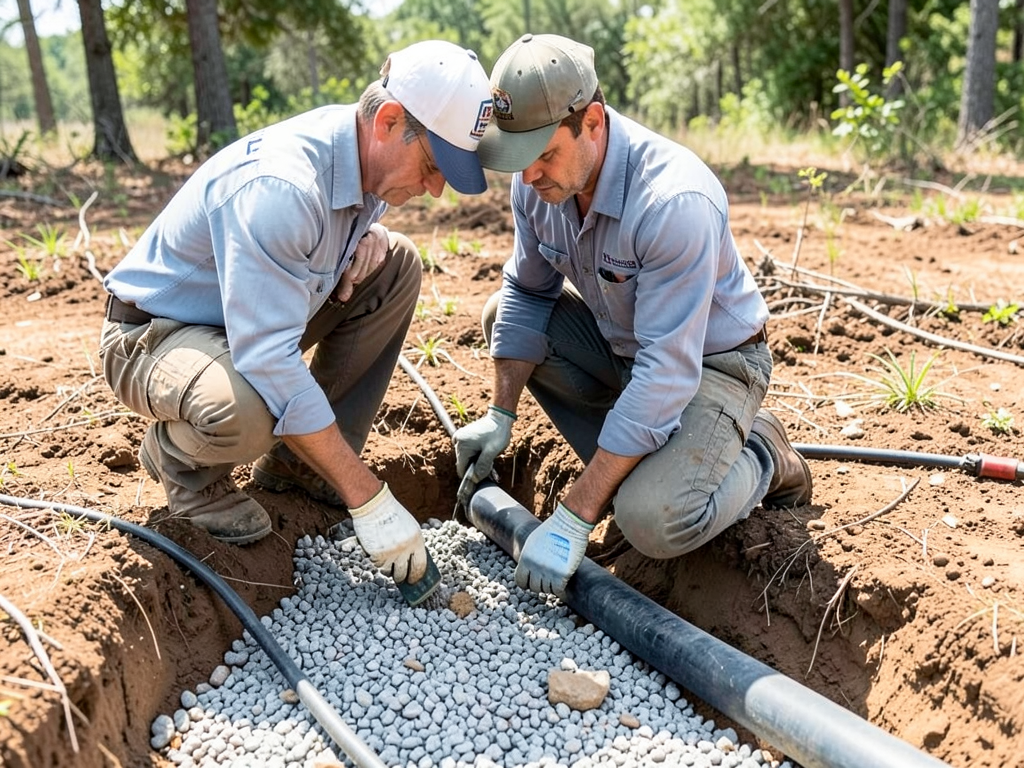
– Technician installing a French drain system in Kenner soil, showing proper gravel bedding and pipe placement techniques specific to Louisiana’s clay conditions.
Kenner’s Unique Soil and Water Table Challenges
Kenner sits on the edge of the Mississippi River Delta, where the soil composition creates specific drainage challenges. The area’s alluvium consists of fine sand, silt, and clay deposited over thousands of years, creating what locals call “gumbo” soil. This dense, sticky material expands when wet and contracts when dry, putting stress on underground pipes and creating pathways for water to collect.. Read more about Why Polybutylene Pipes Are a Ticking Time Bomb for Homeowners in Newer Kenner Developments.
The high water table in Jefferson Parish means French drains must be installed carefully to avoid hitting the water table during excavation. In some areas of Kenner, the water table sits just 3-4 feet below the surface, limiting how deep traditional French drains can go. This constraint requires specialized design approaches that maximize efficiency within these depth restrictions.
Clay soil’s low permeability means water moves through it slowly, sometimes taking days to percolate through just a few inches. A French drain in Kenner must compensate for this by creating larger collection areas and ensuring proper outlet capacity. The system needs to handle not just immediate rainfall but also the slow release of water from surrounding soil.
Local soil testing reveals that Kenner’s clay content ranges from 30-50% in most neighborhoods, with higher concentrations near the river. This composition affects everything from trench stability during installation to the long-term performance of the drainage system. The clay’s tendency to swell when wet can actually help seal the trench sides, preventing water from escaping before reaching the pipe.. Read more about Testing Your Sump Pump Before the Next New Orleans Summer Rainstorm.
Signs Your Kenner Property Needs a French Drain
Recognizing when your property needs drainage improvement can save you thousands in potential foundation repairs. Standing water that persists for more than 24 hours after rainfall indicates your soil’s absorption rate can’t keep up with water input. In Kenner’s climate, this often manifests as soggy patches that remain wet for days or areas where grass won’t grow due to constant moisture.
Foundation issues often start with poor drainage. Look for cracks in your foundation walls, especially diagonal cracks that widen toward the bottom. These indicate hydrostatic pressure building up against your foundation from saturated soil. In Kenner’s older homes, you might also notice doors that stick during wet seasons or windows that become difficult to open when the ground is saturated.
Basement or crawl space moisture problems in Kenner homes signal serious drainage issues. Even homes without traditional basements often have below-grade spaces where plumbing runs or HVAC equipment sits. Musty odors, visible mold growth, or white mineral deposits on concrete surfaces all indicate moisture problems that French drains can address. Plumbing Slidell.
Landscape erosion patterns provide another clue. If you notice mulch washing away, soil disappearing from planting beds, or water carving channels through your yard during storms, your property lacks adequate drainage infrastructure. These patterns often concentrate near downspouts or in natural low points where water collects.
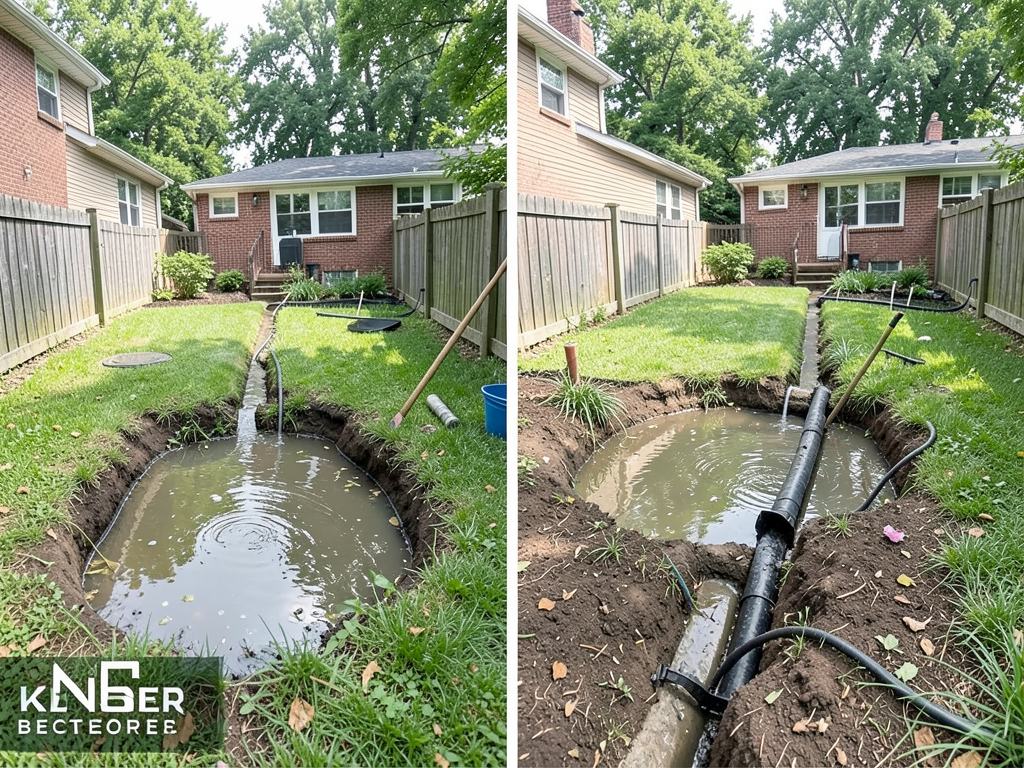
– Before and after comparison showing a Kenner backyard with standing water problems transformed by French drain installation, demonstrating the dramatic improvement in yard usability.
Our Proven Installation Process for Kenner Homes
Installing a French drain in Kenner requires a methodical approach that accounts for local conditions and building codes. Our process begins with a comprehensive site assessment where we evaluate soil composition, existing drainage patterns, and potential discharge locations. This evaluation includes checking for buried utilities using Louisiana’s 811 service and mapping out the most efficient water flow paths.
The excavation phase requires careful timing and technique. We schedule work during dry periods when possible, as Kenner’s high water table can cause trench walls to collapse if the soil becomes too saturated. Our crews use trench boxes in deeper excavations and maintain proper safety margins around buried utilities. The trench depth typically ranges from 18-24 inches in most Kenner neighborhoods, adjusted based on your specific lot conditions.
Pipe selection matters significantly in Louisiana’s climate. We use Schedule 40 PVC with 3/8-inch perforations, which resists soil chemicals and tree root intrusion better than corrugated alternatives. The pipe diameter depends on your yard’s drainage needs, with 4-inch pipe handling most residential applications. For larger properties or areas with severe water issues, we might specify 6-inch pipe to accommodate higher flow volumes.
Proper grading ensures your French drain works as intended. We establish a minimum 1% slope (1 foot drop per 100 feet of run) toward the discharge point, though we often achieve 2-3% when conditions allow. This gradient provides enough velocity to keep sediment moving through the system while preventing erosion at outlet points. In Kenner’s flat terrain, achieving adequate slope sometimes means incorporating multiple collection points or using sump pump assistance.
Jefferson Parish Permits and Regulations
Installing a French drain in Kenner requires compliance with Jefferson Parish drainage ordinances and building codes. The parish mandates permits for any subsurface drainage work that alters natural water flow patterns or connects to public drainage systems. These regulations exist to prevent downstream flooding and ensure new drainage improvements don’t create problems for neighboring properties.
The permit process begins with submitting detailed drainage plans that show the proposed French drain layout, discharge location, and how the system integrates with existing drainage infrastructure. Jefferson Parish requires documentation proving your discharge won’t violate local ordinances, which typically means demonstrating that water will flow onto your property or into approved drainage channels.
Local building codes specify minimum setbacks from property lines and foundation walls. French drains must maintain at least 5 feet from side property lines and 3 feet from rear property lines in most residential zones. The system also needs to stay at least 10 feet from any septic tank or drain field, which affects installation planning for homes on private sewer systems. Trenchless Sewer Repair.
Environmental regulations in Jefferson Parish restrict draining water onto public streets or sidewalks. Most French drain installations must terminate at a dry well, rain garden, or approved drainage swale. In some cases, particularly for larger properties or commercial applications, the parish may require flow calculations demonstrating that your system won’t overwhelm downstream drainage infrastructure during peak rainfall events.
Cost Factors and Long-Term Value
French drain installation costs in Kenner vary based on several factors specific to your property. Basic systems for average-sized yards typically range from $1,500 to $3,500, while comprehensive solutions for larger properties or severe drainage issues can exceed $5,000. These price ranges reflect the complexity of working with Kenner’s soil conditions and the need for proper permits and inspections.
Material costs significantly impact your total investment. High-quality perforated PVC pipe costs more upfront but resists root intrusion and soil chemical degradation better than cheaper alternatives. Washed stone gravel, essential for proper drainage, costs approximately $40-60 per ton in the New Orleans area. The geotextile fabric, while representing only 5-10% of material costs, prevents system failure and extends the drain’s lifespan by decades.
Labor costs in Kenner reflect the specialized knowledge required for successful installation. Experienced contractors understand local soil conditions, can navigate the permit process efficiently, and know how to achieve proper grading on flat terrain. The excavation phase, which typically represents 40-50% of total labor costs, requires more time in Kenner due to the need for careful trench wall support in clay soil.
The long-term value proposition extends beyond immediate water problem resolution. A properly installed French drain protects your home’s foundation from hydrostatic pressure, potentially saving $10,000-$30,000 in foundation repairs. It also increases your property’s usable outdoor space and can boost resale value by making your yard more attractive and functional. Many Kenner homeowners report recovering 80-100% of their French drain investment when selling their homes.. Read more about How to Identify and Fix a Leaky Outdoor Spigot Before the Next Big Freeze.
Maintenance Requirements for Louisiana Climate
French drains in Kenner require specific maintenance routines to handle Louisiana’s climate conditions. The subtropical humidity and frequent rainfall create conditions where sediment can accumulate faster than in drier climates. Annual inspection and cleaning prevent the gradual decline in system performance that leads to failure during critical high-rainfall events.
Spring maintenance should include checking outlet points for debris accumulation and ensuring water flows freely through the system. After Kenner’s heavy spring rains, inspect your yard for any new wet spots that might indicate partial blockages. The high growth rate of local vegetation means roots can invade French drains within 5-7 years if not properly managed, so checking for root intrusion becomes crucial.
Fall maintenance focuses on preparing for hurricane season and winter rainfall. Clear all surface debris from inlet points and ensure the discharge area remains unobstructed. In Kenner, where tropical systems can dump 6-12 inches of rain in 24 hours, your French drain must be operating at peak efficiency before storm season arrives.
Professional cleaning every 3-5 years extends system life significantly. This process involves using specialized equipment to flush the pipe and remove accumulated sediment. The cost of professional cleaning, typically $200-400, pales in comparison to the expense of replacing a failed system or repairing foundation damage from inadequate drainage.
Comparing French Drains to Other Drainage Solutions
French drains offer distinct advantages over other drainage solutions for Kenner properties, but understanding the alternatives helps you make informed decisions. Catch basins work well for surface water but don’t address subsurface moisture issues that plague many Kenner yards. They require more frequent cleaning and can become overwhelmed during heavy rainfall events common to the area.
Sump pumps provide excellent water removal but require electricity and mechanical components that can fail. In Kenner’s climate, power outages during storms often coincide with the exact conditions when you need drainage most. French drains operate passively, requiring no power and having no moving parts that can break down during critical moments.
Surface grading alone rarely provides adequate drainage for Kenner properties. The area’s flat topography means achieving sufficient slope for water to flow away from your home often requires extensive earthmoving that can cost more than installing a French drain. Additionally, surface grading doesn’t address the subsurface moisture that causes many foundation problems.
Combination approaches often provide the best results. Many Kenner properties benefit from French drains integrated with catch basins at low points and proper surface grading. This comprehensive approach addresses both immediate surface water and long-term subsurface moisture issues, providing redundant protection against flooding and foundation damage.
| Drainage Solution | Best For | Maintenance Frequency | Initial Cost Range |
|---|---|---|---|
| French Drain | Subsurface water, foundation protection | Every 3-5 years | $1,500-$5,000 |
| Catch Basin | Surface water only | Annually | $500-$2,000 |
| Sump Pump System | Below-grade water removal | Every 6 months | $1,200-$3,500 |
| Surface Grading | Minor slope correction | None | $1,000-$4,000 |
Frequently Asked Questions
How long does a French drain last in Kenner’s climate?
A properly installed French drain in Kenner typically lasts 20-30 years. The system’s longevity depends on using quality materials resistant to Louisiana’s soil chemistry and humidity. PVC pipe outperforms corrugated alternatives in our climate, while proper geotextile fabric prevents sediment buildup that can clog the system prematurely.
Can I install a French drain myself or should I hire a professional?
While DIY installation is possible, professional installation ensures compliance with Jefferson Parish codes and accounts for local soil conditions. Professionals have the equipment to achieve proper grading on flat terrain and understand how to navigate underground utilities. The cost difference often justifies itself through better performance and warranty protection.
Will a French drain solve all my drainage problems?
French drains excel at managing subsurface water and moderate surface runoff, but severe drainage issues may require additional solutions. Properties with extensive standing water might need a combination of French drains, catch basins, and surface grading. A professional assessment can determine the most effective approach for your specific situation.
How deep should a French drain be in Kenner?
Most French drains in Kenner are installed 18-24 inches deep, though this varies based on your property’s specific conditions. The high water table in some areas limits excavation depth, while properties near Lake Pontchartrain might require shallower installations to avoid hitting saturated soil layers.
What maintenance does a French drain require?
French drains need annual visual inspections and professional cleaning every 3-5 years. Check outlet points for debris, ensure water flows freely during rainfall, and watch for new wet spots in your yard that might indicate partial blockages. Professional cleaning involves flushing the system to remove accumulated sediment.
Can tree roots damage a French drain?
Yes, tree roots can infiltrate French drains through pipe perforations. In Kenner’s climate, where trees grow rapidly, root intrusion can occur within 5-7 years if not properly managed. Using solid pipe with strategically placed cleanouts and avoiding installation near large trees minimizes this risk.
Do I need a permit to install a French drain in Kenner?
Most French drain installations in Kenner require permits from Jefferson Parish. The permitting process ensures your drainage improvements won’t create problems for neighboring properties or overwhelm public drainage systems. Professional installers typically handle the permitting process as part of their service.
How much slope does a French drain need?
French drains require a minimum 1% slope (1 foot drop per 100 feet of run) to function properly. In Kenner’s flat terrain, achieving this gradient sometimes requires creative solutions like using multiple collection points or incorporating sump pump assistance for the final lift to the discharge point.
Ready to solve your drainage problems? Don’t let another storm flood your yard and threaten your foundation. Call (985) 279-3332 today to schedule your professional French drain assessment. Our Kenner drainage experts will evaluate your property, navigate the permit process, and install a system that keeps your yard dry through Louisiana’s heaviest rains.
Pick up the phone and call (985) 279-3332 before the next storm hits. We’ll help you protect your home and reclaim your outdoor space with a French drain system designed specifically for Kenner’s unique soil and climate conditions.
Additional Resources
For more information about drainage solutions and local regulations, visit these authoritative sources:
- Jefferson Parish Drainage Engineering Division – Official information about local drainage requirements and permits
- EPA Soil Drainage Guidelines – Federal standards for subsurface drainage systems
- LSU AgCenter Soil Management Resources – Local soil information specific to Louisiana conditions
You may also find this helpful. Designing the Perfect Plumbing Layout for a Pool House in English Turn.
{
“@context”: “https://schema.org”,
“@type”: “BlogPosting”,
“headline”: “Everything You Need to Know About Installing a French Drain in Your Kenner Backyard”,
“description”: “Protect your Kenner home from flooding with expert French drain installation. Learn about local soil, permits, and our proven process to keep your yard dry year-round.”,
“wordCount”: 2765,
“datePublished”: “2026-06-01T14:32:00.000Z”,
“dateModified”: “2026-06-01T14:32:00.000Z”,
“inLanguage”: “en-US”,
“mainEntityOfPage”: {
“@type”: “WebPage”,
“@id”: “https://libertyplumbingneworleans.com”
},
“publisher”: {
“@type”: “LocalBusiness”,
“name”: “Liberty Plumbing New Orleans”,
“url”: “https://libertyplumbingneworleans.com”
},
“author”: {
“@type”: “Organization”,
“name”: “Liberty Plumbing New Orleans”,
“url”: “https://libertyplumbingneworleans.com”
},
“image”: {
“@type”: “ImageObject”,
“url”: “https://libertyplumbingneworleans.com/wp-content/uploads/2026/03/everything-you-need-to-know-about-installing-a-fre-1.png”
}
}
{
“@context”: “https://schema.org”,
“@type”: “Plumber”,
“name”: “Liberty Plumbing New Orleans”,
“url”: “https://libertyplumbingneworleans.com”,
“address”: {
“@type”: “PostalAddress”,
“addressLocality”: “New Orleans”
},
“areaServed”: {
“@type”: “City”,
“name”: “New Orleans”
}
}
{
“@context”: “https://schema.org”,
“@type”: “FAQPage”,
“mainEntity”: [
{
“@type”: “Question”,
“name”: “How long does a French drain last in Kenner’s climate?”,
“acceptedAnswer”: {
“@type”: “Answer”,
“text”: “A properly installed French drain in Kenner typically lasts 20-30 years. The system’s longevity depends on using quality materials resistant to Louisiana’s soil chemistry and humidity. PVC pipe outperforms corrugated alternatives in our climate, while proper geotextile fabric prevents sediment buildup that can clog the system prematurely.”
}
},
{
“@type”: “Question”,
“name”: “Can I install a French drain myself or should I hire a professional?”,
“acceptedAnswer”: {
“@type”: “Answer”,
“text”: “While DIY installation is possible, professional installation ensures compliance with Jefferson Parish codes and accounts for local soil conditions. Professionals have the equipment to achieve proper grading on flat terrain and understand how to navigate underground utilities. The cost difference often justifies itself through better performance and warranty protection.”
}
},
{
“@type”: “Question”,
“name”: “Will a French drain solve all my drainage problems?”,
“acceptedAnswer”: {
“@type”: “Answer”,
“text”: “French drains excel at managing subsurface water and moderate surface runoff, but severe drainage issues may require additional solutions. Properties with extensive standing water might need a combination of French drains, catch basins, and surface grading. A professional assessment can determine the most effective approach for your specific situation.”
}
},
{
“@type”: “Question”,
“name”: “How deep should a French drain be in Kenner?”,
“acceptedAnswer”: {
“@type”: “Answer”,
“text”: “Most French drains in Kenner are installed 18-24 inches deep, though this varies based on your property’s specific conditions. The high water table in some areas limits excavation depth, while properties near Lake Pontchartrain might require shallower installations to avoid hitting saturated soil layers.”
}
},
{
“@type”: “Question”,
“name”: “What maintenance does a French drain require?”,
“acceptedAnswer”: {
“@type”: “Answer”,
“text”: “French drains need annual visual inspections and professional cleaning every 3-5 years. Check outlet points for debris, ensure water flows freely during rainfall, and watch for new wet spots in your yard that might indicate partial blockages. Professional cleaning involves flushing the system to remove accumulated sediment.”
}
},
{
“@type”: “Question”,
“name”: “Can tree roots damage a French drain?”,
“acceptedAnswer”: {
“@type”: “Answer”,
“text”: “Yes, tree roots can infiltrate French drains through pipe perforations. In Kenner’s climate, where trees grow rapidly, root intrusion can occur within 5-7 years if not properly managed. Using solid pipe with strategically placed cleanouts and avoiding installation near large trees minimizes this risk.”
}
},
{
“@type”: “Question”,
“name”: “Do I need a permit to install a French drain in Kenner?”,
“acceptedAnswer”: {
“@type”: “Answer”,
“text”: “Most French drain installations in Kenner require permits from Jefferson Parish. The permitting process ensures your drainage improvements won’t create problems for neighboring properties or overwhelm public drainage systems. Professional installers typically handle the permitting process as part of their service.”
}
},
{
“@type”: “Question”,
“name”: “How much slope does a French drain need?”,
“acceptedAnswer”: {
“@type”: “Answer”,
“text”: “French drains require a minimum 1% slope (1 foot drop per 100 feet of run) to function properly. In Kenner’s flat terrain, achieving this gradient sometimes requires creative solutions like using multiple collection points or incorporating sump pump assistance for the final lift to the discharge point.”
}
}
]
}
{
“@context”: “https://schema.org”,
“@type”: “BreadcrumbList”,
“itemListElement”: [
{
“@type”: “ListItem”,
“position”: 1,
“name”: “Home”,
“item”: “https://libertyplumbingneworleans.com”
},
{
“@type”: “ListItem”,
“position”: 2,
“name”: “Blog”,
“item”: “https://libertyplumbingneworleans.com/blog”
},
{
“@type”: “ListItem”,
“position”: 3,
“name”: “Everything You Need to Know About Installing a French Drain in Your Kenner Backyard”
}
]
}
{
“@context”: “https://schema.org”,
“@type”: “Service”,
“serviceType”: “Plumbing”,
“provider”: {
“@type”: “LocalBusiness”,
“name”: “Liberty Plumbing New Orleans”,
“url”: “https://libertyplumbingneworleans.com”
},
“areaServed”: {
“@type”: “City”,
“name”: “New Orleans”
},
“description”: “Protect your Kenner home from flooding with expert French drain installation. Learn about local soil, permits, and our proven process to keep your yard dry year-round.”
}